
PhD fellowships in computational biophysics – University of Udine, Italy

The Computational Biophysics Group at the University of Udine, Italy, invites applications for a number of PhD fellowships in computational biophysics applied to nanomedicine. Qualified candidates are encouraged to reach out to prospective supervisors in advance to discuss possible projects to be included in the application package, which must be submitted to the PhD School […]
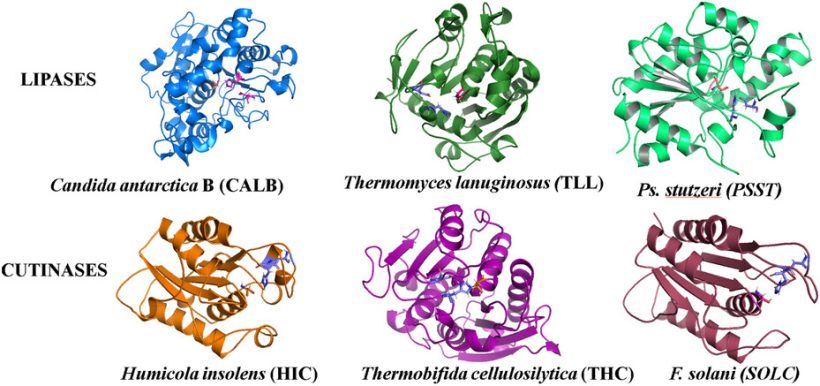
Enzymes for Synthesis and Degradation of Bio-Based Polyesters: Automatic In Silico Screening and Experimental Validation

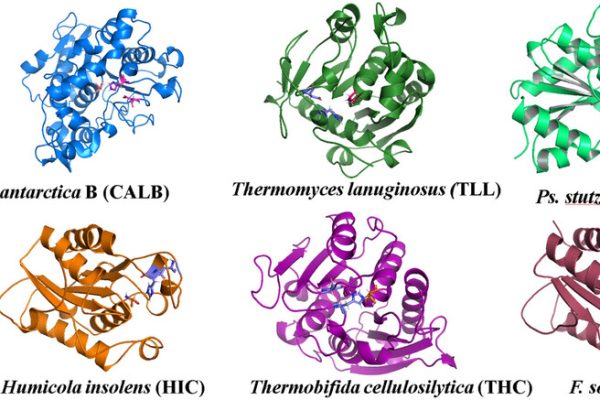
Our study presents a computational workflow to support the eco-design of sustainable polymers by identifying effective biocatalysts for polyester synthesis and degradation. Using well established computational tools like Gromacs (molecular dynamics) and AutoDock (docking), integrated in a modeFRONTIER workflow, the pipeline evaluates enzyme–substrate interactions and ranks candidates based on predicted performance. Screening multiple bio-based monomers […]

Now at the Department of Mathematics, Computer Science and Physics at the University of Udine, Italy!

After a pause from Academia: I am back! I indeed just took  up a position in Applied Physics at the Department of Mathematics, Computer Science and Physics at the University of Udine, Italy. My new coordinates: e-mail: sara.fortuna@uniud.it web: www.sarafortuna.eu Office: B1.2 (first floor) Dipartimento di Scienze Matematiche, Informatiche e Fisiche Universita’ di Udine Via […]

We are part of the H2020-MSCA-ITN team STOP SPREAD BAD BUGS!

We are part of the team being awarded the H2020 Marie Skłodowska-Curie Actions (MSCA) Innovative Training Networks (ITN) with the project “STOP SPREAD BAD BUGS: novel antimicrobial approaches to combat multidrug resistance in bacteria“. As part of the CONCEPT lab we will support a multidisciplinary team composed by medical doctors, biologists, chemists, and physicists to […]

We are part of the PRIN 2020 project CANNOT-ESKAPE!

We are part of the team being awarded the national PRIN2020 project “CANNOT-ESKAPE: Targeting baCteriAl cell eNvelope of Nocosomial paThogens to ESKAPE resistance”. Our unit, led by Rita de Zorzi (University of Trieste), we will support a multidisciplinary team led by Flavia Squeglia (CNR, Naples), supporting biologists, chemists, and physicists tackling the problem of antimicrobial […]

Read our latest paper on the topology to employ for in silico designed peptides!

A new application of BINDesignER/PARCE! Herein, we compared the ability of linear and cyclic peptides generated in silico to target different protein sites: internal pockets and solvent-exposed sites. We selected human lysozyme (HuL) as a model target protein combined with the computational evolution of linear and cyclic peptides. The computational results demonstrated that cyclic peptides […]

Read our latest paper on in silico designed peptides for nanopatterned surface sensors!

We present a rationally designed, self-assembled nanochip capable of capturing a target protein by means of pre-selected binding sites. We show how the confined peptides are capable of specifically capturing β2m from the surface–liquid interface with micromolar affinity, hence providing a viable proof-of-concept for our approach to peptide design   A. Feyisara Adedeji Olulana, M.A. […]

We are part of the H2020-MSCA-ITN team INTERfaces!

We are part of the team being awarded the H2020 Marie Skłodowska-Curie Actions (MSCA) Innovative Training Networks (ITN) – European Industrial Doctorates (EID) with the project “INTERfaces – Heterogeneous biocatalysis reaction cascades training network” INTERfaces combines material science and protein engineering to design tailored enzymes and (bio-based) materials that will complement each other to obtain […]