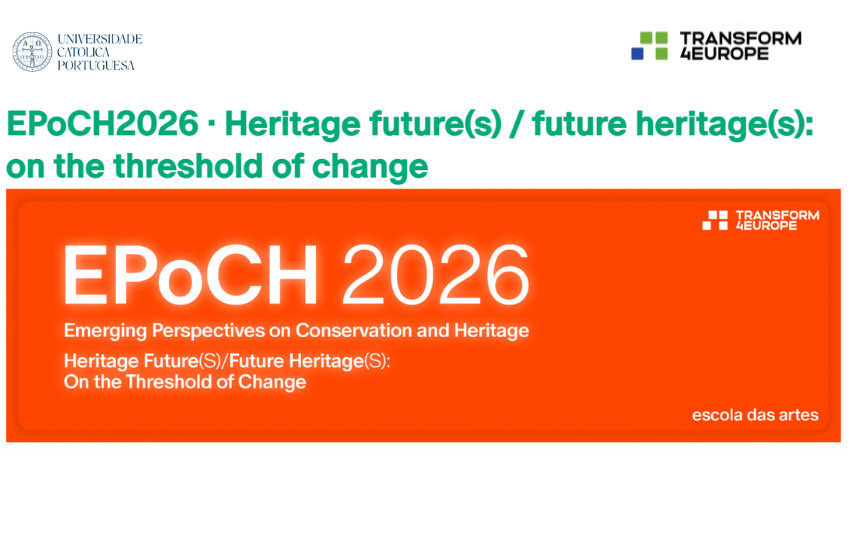
EPoCH 2026

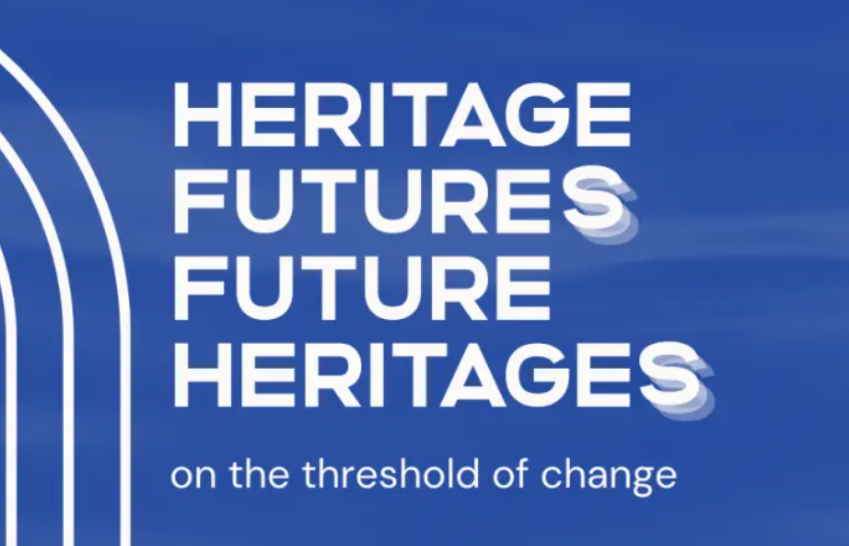
EPoCH 2026, hosted by Universidade Católica Portuguesa, is organised in partnership with the Transform4Europe (T4EU) alliance. The conference brings together scholars, professionals, and artists to explore how heritage and conservation can evolve amid rapid climatic, technological, and societal transformations.

The event centres on two interconnected ideas

  1. heritage future(s) — how current conservation practices enable or limit future possibilities;
  2. future heritage(s) — what future generations will consider worth preserving.

Conference Theme

The central theme, Heritage Future(s) / Future Heritage(s), invites reflection on how present actions shape shared futures, particularly in light of rapid ecological, technological, and social transformations

Key questions include:

  • What responsibilities emerge at this threshold of change?
  • How can heritage ecosystems be made sustainable?
  • How do material, immaterial, and digital forms of heritage evolve?

Topics of Interest (non-exhaustive)

  • Challenging heritage: borders, margins, and new epistemologies
  • Conservation-restoration: new tools, concepts, and ethics of the immaterial
  • Heritage and climate change
  • Over-tourism and sustainable tourism models
  • Sustainable materials, technologies, and participatory strategies
  • Digitalisation, data science, and AI in heritage protection and creation

Keynote Speakers

  • Cornelius Holtorf – (School of Cultural Sciences, Linnaeus University);
  • Paulo Lourenço – (Department of Civil Engineering, University of Minho);
  • Roberta Altin – (Department of Humanities at the University of Trieste, Italy).

Key Dates

Conference participation (Call for Papers – EPoCH 2026) Call for Papers | School of Arts

  • Abstract submission deadline: 4 January 2026
  • Notification of acceptance: 20 January 2026

T4EU Common European Heritage Week 2026

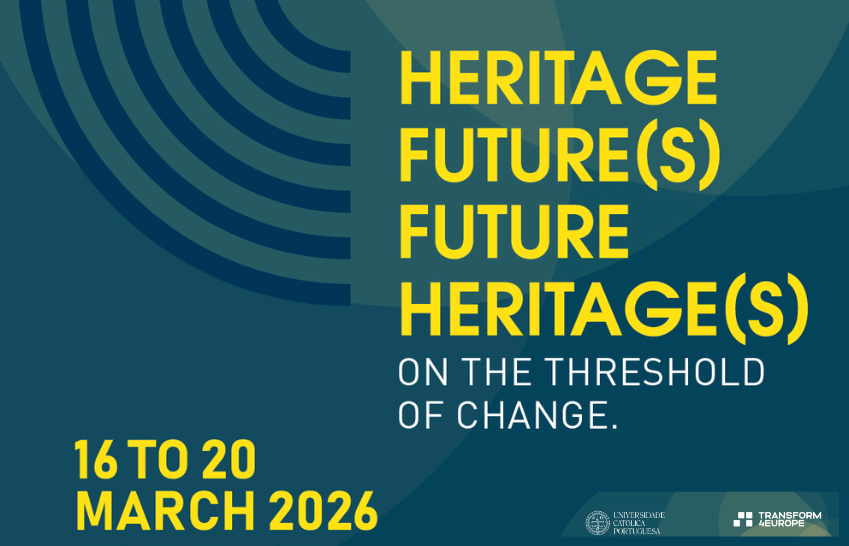
Porto, 16–20 March 2026

The T4EU Common European Heritage Week 2026 will take place in Porto (Portugal) from 16 to 20 March 2026, hosted by the Universidade Católica Portuguesa.

The week will bring together researchers, professionals, students, and cultural practitioners from across the Transform4Europe alliance to reflect on the future of cultural heritage in a time of profound ecological, technological, and social change.

The overarching theme of the week is Heritage Future(s) / Future Heritage(s): On the Threshold of Change

The programme includes conferences, workshops, public events, exhibitions, and site visits, offering multiple perspectives on heritage conservation, sustainability, and innovation.

Programme Highlights

The Museu das Convergências is a new cultural facility in Porto, dedicated to transculturality in art and connected art histories. The visit will conclude with a conversation between Rui Oliveira Lopes (Director of the Museum) and Roberta Altin, moderated by Laura Castro (UCP).

The programme will also feature:

  • “Invisible Garden” Exhibition – a T4EU common culture travelling exhibition
  • Additional cultural activities and surprises throughout the week

3rd Call for T4EU Seed Funding Programme

Apply by 15 March 2026!

Transform4Europe has launched the third call of the Seed Funding Programme, open from 8 December 2025 to 15 March 2026.

The call supports innovative, cross-university educational projects involving at least two T4EU partner universities, and is designed to encourage new collaborations within the Alliance.

What the call offers
Up to €22,000 per project to develop and pilot new educational initiatives.
Funding can support joint study programmes, micro-credentials, innovative PhD pathways, new mobility formats, and teaching activities addressing digital, social and environmental transformation.

Why apply
The Seed Funding Programme is an opportunity for UniTS staff to build lasting academic partnerships, experiment with new educational models and actively contribute to shaping the future of European higher education within T4EU.

Timeline
Applications open: 8 December 2025
Deadline: 15 March 2026
Results: April 2026
Project start: May 2026

Partner search is supported through the mandatory  Connect4Research platform.
Two online info sessions will take place on 26 January and 23 February 2026.

UniTS staff are encouraged to take part and submit their proposals.

Get all details and application materials here

First Festival of European Culture and Languages

Tourism and Heritage from the Border – 7–11 July 2025 | University of Trieste, Italy

Tourism is a powerful force in shaping Europe’s cultural and economic landscape, but it also raises critical issues: overtourism, simplified narratives, and the erasure of historical complexity. These effects are particularly evident in border cities where rich, layered identities and diverse memories are often reduced to stories that are easier to market.

The Festival of European Culture and Languages, organised within the Transform4Europe University Alliance, takes on these questions through an immersive and critical learning experience for students and researchers coming from across Europe.

Trieste —an emblematic border city with a complex past— becomes the stage for this open-air laboratory on heritage. Designed as a Blended Intensive Programme (BIP), the Festival combines theory and practice through several lectures, interdisciplinary workshops, urban explorations, and creative performances. The aim is to challenge standardised heritage representations and foster new reflections on identity, memory, and cultural sustainability in a changing Europe.

Programme Highlights:

25th June – An online kick-off meeting for the participants, with an introduction to the goals and structure of the week. The session includes two lectures on tourism intertwined with mobility and memory, led by Professors Roberta Altin and Alessandro Carrieri.

7th July – The official launch of the Festival at the University of Trieste, followed by a guided tour of the city led by Professors Roberta Altin, Tullia Catalan, Giuseppe Grimaldi and Alessandro Carrieri. Participants will critically examine Trieste’s tourist image through the lenses of anthropology, history, and heritage studies.

8th July – A full day dedicated to the theme of “heritage of overtourism.” Coordinated by Roberta Altin and Giuseppe Grimaldi, the day opens with a roundtable discussion featuring scholars from various disciplines. This is followed by a workshop on mapping border tourism led by Stefano Mastromarino. The day ends with the screening of Abito di Confini (2025), a film by Opher Thomson exploring the connections between tourism and migration — free and open to the public event.

9th July – A deep dive into memory tourism, coordinated by Professors Tullia Catalan and Alessandro Carrieri. The group will take a critical excursion to historical and natural heritage sites, focusing on contested, forgotten, and reinterpreted memories and the reshaping of the spaces that host them.

10th July – A day focused on multilingualism, a foundational element of Trieste’s identity. Organised by Federica Fragapane of the School for Interpreters and Translators, the day begins with a lecture by Professor Piergiorgio Trevisan on the legacy of multilingualism in Trieste, followed by hands-on language workshops.

11th JulyFinal presentations: students will share their projects, developed collaboratively during the week. The day concludes with the announcement of the winning initiatives for the T4EU Common Cultural Activities, a cross-alliance initiative dedicated to heritage collaboration among Transform4Europe partner universities.

The Festival — which will also be enriched by the simultaneous running of the “First T4EU Sustainable Heritage Student Competition”, focusing on the relationship between heritage, the environment, and generational awareness — will serve as an opportunity to raise participants’ awareness of key contemporary issues.

In addition to involving students, researchers, and professors from the University of Trieste and various European universities, selected events from the Festival and the Student Competition will also be open to the general public. These events, free and open-access, will be held in English and include:

  • Tuesday, July 8, 9:30 AM, Androna Baciocchi (Room A) – Perspectives on Overtouristification and Heritage Roundtable with professors, researchers, and experts from UniTS, OGS, SISSA, ECAN, and UCL.
  • Tuesday, July 8, 6:00 PM, Cinema Ariston Abito di Confini (2025) by Opher Thomson Film screening followed by a discussion with the director.
  • Wednesday, July 9, 2:00 PM, Androna Baciocchi (Room A) – Climate Change across Space and Time Roundtable with professors, researchers, and experts from UniTS, OGS, AMP Miramare, and gECO.
  • Thursday, July 10, 9:30 AM, Androna Baciocchi (Room A) – Crossroads of Voices: Multilingualism in a Global Context and the Unique Case of Trieste Lecture by Prof. Piergiorgio Trevisan, UniTS.
  • Friday, July 11, 9:30 AM, Androna Baciocchi (Room A) – Work Group Projects Student Presentations Presentation of the projects developed by students during the Festival’s working week.

T4EU people: Prof. Guido Bortoluzzi

Professor Guido Bortoluzzi, Coordinator of the Phd Programme in Circular Economy, recently took part in the 5th Science Café of the Transform4Europe (T4EU) alliance, held in Portugal.
The event, titled “What drives real innovation in industry and the circular economy?”, highlighted the crucial role of universities in turning science into tangible impact, with examples ranging from hydrogen-powered cruise ships to award-winning biotech startups.

We asked some questions to Prof. Bortoluzzi.

1. What added value does being part of the Transform4Europe alliance bring to the University of Trieste, and how is it reflected in research and teaching?

Being part of international alliances is always a source of enrichment. Mutual understanding between people not only facilitates the exchange of knowledge, but also lays a solid foundation for future collaboration — in research, teaching, and the sharing of best practices. In the case of T4EU, the bond developing among participating universities is particularly strong. This represents an excellent premise for building a stable, long-term European network for ongoing collaboration.

2.How do events like the Science Café help strengthen collaboration among T4EU partner universities?

Through events such as the Science Cafés we discover that we are both similar and different. Similar because in the end the challenges we face in our universities are not very different. But different because the ways to address them can also diverge significantly. And these can become formidable learning opportunities for us researchers.

3. During Innovation Day in Portugal, the circular economy was a key theme. In your view, what are the most pressing challenges and real opportunities where universities and industry can truly make an impact?

Today, the most important thing is to stay the course — resisting the outdated siren songs that suggest sustainability is no longer urgent or relevant. The momentum must not stop, because real impact on the ecosystem depends on a deep transformation of our production systems and consumption habits. On this, there can be no turning back. At the same time, this transition unlocks vast opportunities for innovation — in both technology and business models. In short, the circular economy must continue to be seen as a powerful business opportunity. Without that incentive, progress slows… and so does the ship.

T4EU Summer School for Refugee Researchers and Scholars at Risk in Sofia

We are excited to announce the T4EU Summer School dedicated to refugee researchers and scholars at risk, which will take place in Sofia from September 1st to 6th, 2025. This event aims to enhance the integration of participants into the European labour market through an intensive and interactive training program.

Event Details:

Dates: September 1-6, 2025

Location: Sofia, Bulgaria

Participants: 30 refugee researchers and scholars at risk, including PhD students, postdocs, and experienced researchers.

Objectives:

  • Improve communication skills with diverse audiences.
  • Collaborate effectively in international teams.
  • Solve problems and evaluate information.
  • Research funding opportunities in Europe.
  • Apply for funding or jobs.

Join Us!

Don’t miss this unique opportunity to enhance your skills and integrate into the European labour market.

The deadline is 8th June 2025. 

https://forms.office.com/e/ixeGyJpcUD

T4EU Chair Programme – Mobility Opportunities for Teaching Staff

Transform4Europe Chair Programme – 2nd Call for Applications

The Transform4Europe (T4EU) Chair Programme is now open for its second call for applications. This programme offers academic staff from the Transform4Europe Alliance partner universities the opportunity to participate in short-term teaching and research mobility aimed at strengthening cross-university collaboration and innovation in higher education.

The initiative supports visits of a minimum of five working days at one of the T4EU partner universities. During their stay, selected T4EU Chairs will:

  • Deliver teaching activities aligned with the alliance’s shared focus areas (Knowledge Entrepreneurship, Societal Transformation, and Sustainable Development),
  • Collaborate with local faculty and students,
  • Participate in joint academic events and workshops,
  • Contribute to the creation of a truly European and interdisciplinary academic environment.

The programme is open to academic staff from all disciplines, and encourages proposals that are innovative and collaborative in nature.

Each university within the T4EU alliance manages its own selection process, so application deadlines and procedures vary by institution. Applicants are strongly advised to consult the official call for detailed information regarding:

  • Eligibility criteria,
  • Hosting institutions and available disciplines,
  • Funding arrangements,
  • Application forms and deadlines.

📄 Full details and application guidelines are available here:
👉 transform4europe.eu/t4eu-chair-programme-2nd-call-for-applications

By participating in the T4EU Chair Programme, academic staff become key actors in shaping the European University of the future, helping to develop innovative teaching approaches and deepen inter-university cooperation within the alliance.

For further information, please contact the International Office of your home institution.

CLIMATE CHANGE AND EUROPEAN CITIES. FIRST T-LAB Fair and the 2nd Stakeholder Challenge in Sofia

Sofia University is proud to host the FIRST T-LAB Fair and the 2nd Stakeholder Challenge, happening 2–4 June 2025 in Sofia.

Topic:
CLIMATE CHANGE AND EUROPEAN CITIES: ADAPTATION TO THE URBAN HEAT ISLAND EFFECT AND NATURE-BASED SOLUTIONS

During the event, you will:

  • Explore the innovative work of the Transform4Europe (T4EU) Labs
  • Participate in workshops and thematic discussions
  • Visit a Geospatial Research & Technologies Fair
  • Engage with stakeholders, researchers, and businesses
  • Witness the Stakeholder Challenge — a unique experience for students to tackle real-world urban issues

Who should apply?
BA, MA, and PhD students with an interest in climate action, sustainability, urban planning, and innovation.

Each partner university is going to select 2 students. Don’t miss the chance to be part of it!

To apply, just click here

Application deadline: 15 May 2025

Presentation of the Book “Multicultural Cities of the Habsburg Empire” by Catherine Horel

On Thursday, April 10, at 5:00 PM, at the Department of Humanities of the University of Trieste, the book Multicultural Cities of the Habsburg Empire, 1880-1914. Imagined Communities and Conflictual Encounters by Catherine Horel (CEU Press, 2023) will be presented.
(Open-access link: here)

The book, the result of extensive and passionate research, offers a comparative analysis of 12 cities within the Habsburg Empire, including Trieste. It examines aspects of daily life such as education, associations, culture, and economy. Horel’s study presents an image of an empire whose urban centers were marked by cultural and political dynamism, despite ongoing national conflicts.

The author will be joined in discussion by historians Borut Klabjan, Francesco Toncich, and Tullia Catalan.